.png)

Jihan: Exclusive Interview with “My Father And Qaddafi” Director & Producer

Updated: May 15

“I made this film because I don't want my father to disappear a second time. It is a small act of justice for him — a service to his memory and to his love for his country. Telling his untold story also means telling an untold story of Libya, spanning nearly a century of Libyan history and politics. I chose to use historical archives because I believe it is important, for both global audiences and Libyans, to witness the Libya we have lost. When my father disappeared in 1993, he was one of the most influential visionaries of his generation in the Arab world, and his voice was silenced. In light of today’s global conflicts, his absence is felt more than ever." — Jihan

You have taken this story from a nomination for the Golden Globes Impact Prize in Venice to winning top honors in Doha and Marrakech; does this global recognition feel like the "act of justice" you set out to achieve for your father Mansur Rashid Kikhia?
I made this film as a small act of justice for my father - a service to his memory and to his love for his country. Telling his untold story also means telling an untold story of Libya, spanning nearly a century of Libyan history and politics. I chose to use historical archives because I believe it is important, for both global audiences and Libyans, to witness the Libya we have lost.
I treated his story, and the story of Libya itself, as a puzzle demanding a solution. This film is my contribution to a vast movement of healing - not just for my family, but for all Libyans. It is a genuine offering. I like to imagine the world is now helping me carry the weight of my father's courage, helping to put a human face on the Libyan experience. These awards are an honor, and they serve as an encouragement for me to continue my mission.
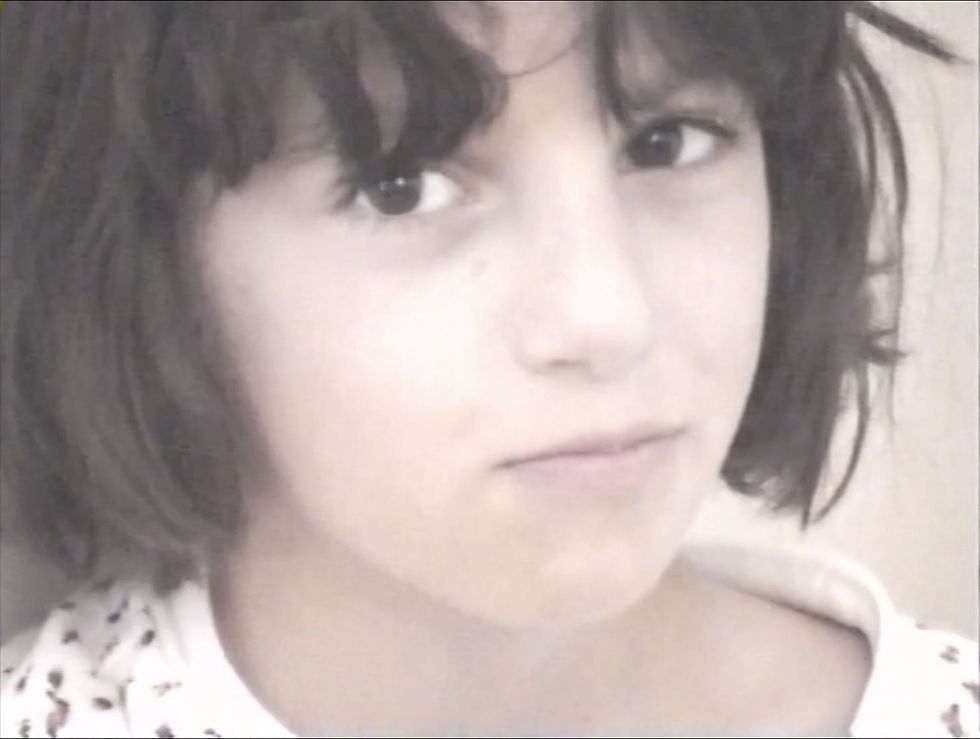
You were only six years old when your father disappeared in Cairo; did the decade you spent making this film allow you to finally meet the man behind the fading childhood memories?
My father and I are connected in a realm that I can’t describe. Our bond lies beyond my numbness and shock - a place that I can’t name or clearly feel. My life with my father is trapped in a faint dream, illuminated by my family’s stories and by my faith. Sometimes my faith is fragile and unforgiving, and sometimes it is gentle and comforting. Ultimately, although the mystery of my father silently tortures me I believe that my connection with him is in a peaceful place where none of this matters.

Your mother, Baha, spent nineteen years searching and even confronted Muammar Qaddafi in the desert; how much of this documentary is a love letter to her refusal to let the world forget him?
My mother is a woman of unwavering principle; her conviction is a magnetic force. Her sense of duty—not just as a mother, but as a human being - is what sustains me. Not only did she courageously search for my father, exposing herself to the world as a woman alone, but she protected us as children.
She is raw, potent, and possesses a razor-sharp wit. As an artist and oil painter, she fills our world with melodies and celebrates the beauty of Damascus, Jerusalem, and Baghdad, and the old cities of her family's history. We grew up in a home that defied the darkness - it was a place of play, color, and music. She gave us permission to be happy even while she was out fighting for justice. She taught us that while life is dangerous and unjust, we can still choose love and joy. She is the reason I have the strength to honor my father today. This film is my way of reaching out to embrace her.

Growing up in Paris and the US, you lived between the safety of the West and the trauma of Libya; how did that distance shape your unique voice as a filmmaker?
My identity is a product of politics. I was born in Paris during my father’s exile. When he disappeared, I was uprooted to Washington D.C. to live with my sister, separated from my mother, and forced to trade my French for English within months. My childhood in Paris became a ghost.
I am part of a diaspora that is constantly fleeing uncertainty - feeling culturally orphaned and physically displaced. Libya was always this distant, terrifying mystery, yet I was silently obsessed with it. I felt a part of myself hovering over that land. Every time I return, it feels like a reckoning. I live in the 'in-between,' looping through parallel lives and languages. Filmmaking allowed me to take those fractured elements and give them a structure. It was a healing exercise to turn a nebulous, haunting past into something I could finally hold.

Your father, Mansur, was a diplomat who believed he could reason with a dictator; was it painful to document the moment his faith in dialogue led him into the trap?
This process revealed the true harshness of life and the treachery of investing in a passion. The business of art is full of contradictions - you are trying to quantify the abstract. Over the last decade, I’ve faced deception, malice, and fear. Ironically, those professional struggles gave me a deeper empathy for my father. I began to understand his perseverance not as a political statue, but as a man. I started asking how he felt in those moments of betrayal. By stripping away the 'glory' of his title, I was able to use my imagination to finally find the human being.

After decades of not knowing, your father’s body was found in a freezer near Qaddafi’s palace in 2012; how did you find the strength to translate such a macabre reality into art?
I followed a raw intuition. I promised myself I would tell the truth, no matter how absurd or horrific it became. I had to break the spell of shock that had kept me silent for so long. It was a rite of passage. I had to ask myself: if I am too afraid to face my own father’s story, how can I ever expect the rest of the world to care?
You chose to use grainy home videos and archival footage rather than just interviews; was this your way of fighting the "national amnesia" that Qaddafi tried to impose on Libya?
I chose honesty over polish. Life is disjointed and messy. I wanted the film to embrace those sudden silences and haunting gaps because they reflect my internal state. While the film needs a linear logic for the audience to follow, the emotional core had to be real.
Qaddafi’s 42-year rule didn't just govern; it suffocated. It imposed a collective amnesia, veiling everything that came before - the Italian colonization, the discovery of oil, the old identity of the country. I wanted to venture into that history to help piece together the fragments of who we are. His 'cult of personality' tried to erase us, and this footage is my way of saying we were always there.

Public figures often become two-dimensional symbols after death; how important was it for you to show your father’s flaws and humanity rather than just his political heroism?
I needed to humanize him to heal. Living in the shadow of a hero is a heavy burden; I’ve spent my life terrified of disappointing him or Libyan society. But I wasn't looking for a symbol - I was longing for a father. Seeing his flaws gave me permission to be flawed myself. The world’s response has been the 'tender embrace' I was missing. Strangers have stepped into that void with empathy, showing me a kindness that has been incredibly restorative.

You have named your production company "Desert Power," which suggests resilience; does this mark your transition from a daughter searching for answers to a filmmaker commanding her own narrative?
I hadn't viewed it through that lens, but I find that interpretation incredibly moving. The desert appears hostile and barren, but it possesses a secret language and hidden networks beneath the sand. 'Desert Power' is about our fragility, yes, but it’s also about the ancient knowledge of my ancestors. It’s the realization that we can find our greatest strength in the most unlikely, desolate places.
Now that you have reclaimed your father’s story and shared it with the world, are you ready to close this chapter of grief and turn your lens toward the future?
To move forward, I had to walk directly back into the past. My life is inextricably linked to Libya’s history.
If I didn't integrate that, I would be moving in a loop. I’m not looking for a definitive 'end'. But I have expanded.
I can now hold my father, my country, and my identity with more honesty. The truth reinforces my center.
I am trying to weave acceptance and peace with authenticity and freedom. But I still have a lot to learn.

PR: Valentina Castellani-Quinn
Film Credits:
Director: Jihan
Producers: Jihan, Dave Guenette, Mohamed Soueid, Sol Guy, Valentina Castellani-Quinn
Production Company: Desert Power
Co-Producers: Andreas Rocksén, Mohamed Siam, William Johansson Kalén
Co-Production Company: Laika Film & Television AB, Siam Films
In Association With: Quiet